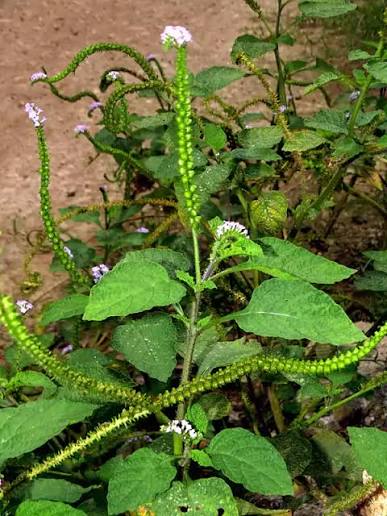
Radical Scavenging and Anti-inflammatory Potentials of Aqueous and Hydroethanol Extracts of Heliotropium indicum Aerial Parts
DOI:
https://doi.org/10.26538/tjdr/v3i3.3Keywords:
Heliotropium indicum, radical scavenging, anti-inflammatory, antioxidant, phenolic compounds, IC50Abstract
Purpose: Heliotropium indicum (H. indicum) is widely used in traditional medicine to treat conditions linked to inflammation and oxidative stress, yet its antioxidant and anti-inflammatory properties remain scientifically unestablished. This study examined the radical-scavenging and anti-inflammatory effects of aqueous and hydroethanol extracts prepared separately from the leaves and flowers of H. indicum. Methods: Fresh leaves and flowers were washed, shade-dried, powdered, and steeped independently in distilled water or 50% hydroethanol for 72 hours, yielding four extracts: leaf aqueous extract (HILAE), leaf hydroethanol extract (HILHE), flower aqueous extract (HIFAE), and flower hydroethanol extract (HIFHE). Radical-scavenging activity was assessed via DPPH, ABTS, hydroxyl (OH), and nitric oxide (NO) assays against BHT, while anti-inflammatory activity was evaluated through membrane stabilization, inhibition of heat-induced hemolysis, protein denaturation, and proteinase inhibition assays against sodium diclofenac; IC50 values were determined using GraphPad Prism 10. Results: Activity generally rose with extract concentration. HILHE showed the strongest overall radical-scavenging activity, with IC50 values of 93.78, 54.10, 87.61, and 72.43 μg/mL for DPPH, ABTS, OH, and NO, respectively, in some cases matching or exceeding BHT. HIFHE gave IC50 values of 64.13, 83.36, and 88.54 μg/mL for membrane stabilization, hemolysis inhibition, and proteinase inhibition, comparable to diclofenac sodium, while HILHE recorded the lowest IC50 of 78.04 μg/mL for protein denaturation. Conclusion: Both extract types showed radical-scavenging and anti-inflammatory activity, with hydroethanol extracts performing more consistently across assays. These findings support the traditional use of H. indicum and point to bioactive compounds underlying its antioxidant and anti-inflammatory effects.Downloads
References
1. Chaudhary PC, Janmeda P, Docea AO, Yeskaliyeva B, Abdull Razis AF, Modu B, et al. Oxidative stress, free radicals and antioxidants: potential crosstalk in the pathophysiology of human diseases. Front Chem 2023;11:1158198.
2. Chandimali N, Bak SG, Park EH, Lim HJ, Won YS, Kim EK, et al. Free radicals and their impact on health and antioxidant defenses: a review. Cell Death Discov 2025;11:19.
3. Morris G, Gevezova M, Sarafian V, Maes M. Redox regulation of the immune response. Cell Mol Immunol 2022;19:1079–1101.
4. Mairuae N, Buranrat B, Yannasithinon S, Cheepsunthorn P. Oroxylum indicum Kurz (L) leaf extract exerted antioxidant and anti-inflammatory effects on LPS-stimulated BV2 microglial cells. Trop J Pharm Res 2024;23(9):1409–1415.
5. Piacenza L, Zeida A, Trujillo M, Radi R. The superoxide radical switch in the biology of nitric oxide and peroxynitrite. Physiol Rev 2022;102(4).
6. Atanasov AG, Zotchev SB, Dirsch VM, Supuran CT; International Natural Product Sciences Taskforce. Natural products in drug discovery: advances and opportunities. Nat Rev Drug Discov 2021;20(3):200–216.
7. Orrico F, Laurance S, Lopez AC, Lefevre SD, Thomson L, Möller MN, Ostuni MA. Oxidative stress in healthy and pathological red blood cells. Biomolecules 2023;13(8):1262.
8. Serna-Hernandez SO, Escobedo-Avellaneda Z, García-García R, Rostro-Alanis MJ, Welti-Chanes J. High hydrostatic pressure induced changes in the physicochemical and functional properties of milk and dairy products: a review. Foods 2021;10(8):1867.
9. Matotoka MM, Mashabela GT, Masoko P. Phytochemical content, antibacterial activity, and antioxidant, anti-inflammatory, and cytotoxic effects of traditional medicinal plants against respiratory tract bacterial pathogens. Evid Based Complement Alternat Med 2023;2023:1243438.
10. Al-Taie A, Hussein AN, Albasry Z. Prescription pattern of non-steroidal anti-inflammatory drugs (NSAIDs) among community patients with musculoskeletal and co-morbid conditions: a cross-sectional study from an Iraqi province. Trop J Pharm Res 2021;20(1):203–210.
11. Li JX, Cummins CL. Fresh insights into glucocorticoid-induced diabetes mellitus and new therapeutic directions. Nat Rev Endocrinol 2022;18:540–557.
12. Xu X, Liu A, Hu S, Ares I, Martínez-Larrañaga MR, Wang X, et al. Synthetic phenolic antioxidants: metabolism, hazards and mechanism of action. Food Chem 2021;353:129488.
13. World Health Organization. Global traditional medicine strategy 2025–2034. Geneva: World Health Organization; 2025. ISBN: 978-92-4-011317-6.
14. Chopra B, Dhingra AK. Natural products: a lead for drug discovery and development. Phytother Res 2021;35(9):4660–4702.
15. Sarkar C, Mondal M, Khanom B, Hossain MM, Hossain MS, Sureda A, et al. Heliotropium indicum L.: from farm to a source of bioactive compounds with therapeutic activity. Evid Based Complement Alternat Med 2021;2021:9965481.
16. Fayed MAA. Heliotropium; a genus rich in pyrrolizidine alkaloids: a systematic review following its phytochemistry and pharmacology. Phytomed Plus 2021;1:100036.
17. Assouma FF, Dah-Nouvlessounon D, Tchogou AP, Sangaré MM, Roko G, Boya B, et al. Phytochemical profile and biological activities of the roots of Caesalpinia bonduc and the aerial part of Heliotropium indicum. Biochem Res Int 2026;2026:9058679.
18. Adepoju AJ, Adepoju AA, Olawoore IT, Ayodele ET. Phytochemical profiling, antioxidant, and antidiabetic activities of defatted ethanol aerial extract of Heliotropium indicum: insights from GC-MS and in vitro studies. Trop J Phytochem Pharm Sci 2025;4(8):320–328.
19. Mairuae N, Buranrat B, Cheepsunthorn P. Crude extracts of Momordica cochinchinensis (Lour.) Spreng exerts antioxidant and anti-neuroinflammatory properties in LPS-stimulated BV2 microglia. Trop J Pharm Res 2024;23(1):91–97.
20. Anthony PC, Eseyin OA, Attih E, Johnson E, Ebong A, Asanga EE. Synthesis of some esters of cinnamic acid and evaluation of their in vitro antidiabetic and antioxidant properties. Trop J Pharm Res 2022;21(1):131–136.
21. Mairuae N, Cheepsunthorn P, Buranrat B. Antioxidant and anti-inflammatory activities of Oroxylum indicum Kurz (L.) fruit extract in lipopolysaccharide-stimulated BV2 microglial cells. Trop J Pharm Res 2021;20(4):833–838.
22. Nwankwo NE, Okeke ES, Nworah FN, Ezeako EC. Phytochemical composition and potential anti-inflammatory and antioxidant mechanisms of leaf extracts of Sida linifolia L. (Malvaceae). J Herb Med 2023;38:100630.
23. Renukadevi KP, Senthil Kumar KL, Sivashanmugam T. In vitro antioxidant activity of Coccinia grandis (L.) Voigt. Int J Pharma Bio Sci 2011;2(2):324–330.
24. Pellegrini N, Re R, Yang M, Rice-Evans C. Screening of dietary carotenoids and carotenoid-rich fruit extracts for antioxidant activities applying the ABTS radical cation decolorization assay. Methods Enzymol 1999;299:379–389.
25. Liu C, Zhao W, Christ GJ, Gladwin MT, Kim-Shapiro DB. Nitric oxide scavenging by red cell microparticles. Free Radic Biol Med 2013;65:1164–1173.
26. Shinde UA, Phadke AS, Nair AM, Mungantiwar AA, Dikshit VJ, Saraf MN. Membrane stabilizing activity — a possible mechanism of action for the anti-inflammatory activity of Cedrus deodara wood oil. Fitoterapia 1999;70(3):251–257.
27. Elias G, Rao MN. Inhibition of albumin denaturation and anti-inflammatory activity of dehydrozingerone and its analogs. Indian J Exp Biol 1988;26(10):540–542.
Published
Issue
Section
License

This work is licensed under a Creative Commons Attribution-NonCommercial-ShareAlike 4.0 International License.