Effect of Launaea taraxacifolia on Pregnancy Outcome, its Safety Profile and Mechanism(s) of Alleviating Labour Pain in Gravid Rats
DOI:
https://doi.org/10.26538/tjdr/v3i3.4Keywords:
Launaea taraxacifolia, Pregnancy, Labour pain, Prostaglandin E2, Prostaglandin F2α, EstradiolAbstract
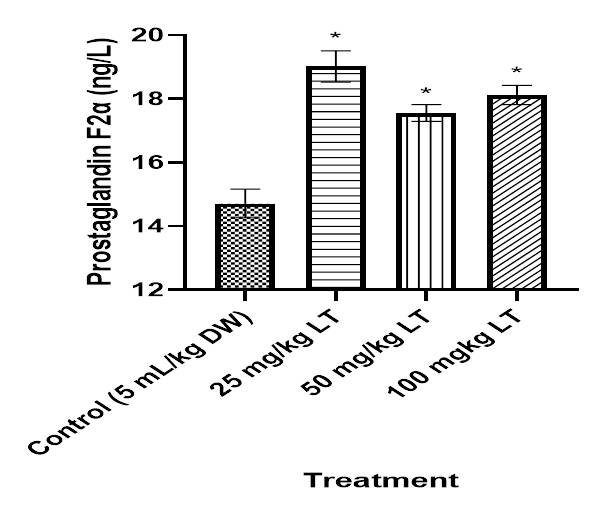
Purpose: Launaea taraxacifolia (LT) is traditionally utilised by pregnant women to ease labour. This study evaluated LT’s effects on pregnancy outcomes, its safety profile, and the mechanism by which it alleviates labour pain. Methods: Whole plants of LT were extracted by maceration in distilled water. Pregnant rats were assigned to four groups and treated as follows: control (distilled water, 5 mL/kg/day); 25, 50, and 100 mg/kg/day LT, respectively, from gestational day (GD) 14 to GD 20. On GD 21, pups were delivered via caesarean section, and pregnancy outcome parameters were assessed. Blood samples, amniotic fluid, umbilical cord, placenta, and maternal organs were analysed. The active constituents in LT were identified using High-performance liquid chromatography (HPLC) analysis. Results: No significant differences were observed in pregnancy outcomes, including the weights of dams, pups, and placenta; litter size; crump-rump length; and head circumference. Biochemical analyses indicated a reduction in sodium and chloride ions in the 100 mg/kg LT dose group and an increase in alkaline phosphatase in the 50 and 100 mg/kg LT groups. Estradiol levels decreased across all treated groups; however, prostaglandin E2 concentrations in both the amniotic fluid and umbilical cord samples remained unchanged, while prostaglandin F2α increased significantly in the amniotic fluid of the treated groups. Major active components in LT include cyanogenic glycosides, phytate, epihendrine, steroids, flavan-3-ols, anthocyanins, and naringin. Conclusion: LT had no adverse effect on pregnancy outcomes, and its mechanisms for alleviating labour pain and facilitating labour may be attributed to its effects on estradiol and prostaglandin F2α.Downloads
References
1. Jan M, Mir TA, Ahmad Jan H, Bussmann RW, Aneaus S. Ethnomedicinal study of plants utilised in pregnancy, childbirth and postpartum healthcare in Kashmir Himalaya. J Herb Med 2023;42:100767. doi:10.1016/j.hermed.2023.100767
2. Kamel N, El Boullani R, Cherrah Y. Use of Medicinal Plants during Pregnancy, Childbirth and Postpartum in Southern Morocco. Healthcare 2022;10(11):2327. doi:10.3390/healthcare10112327
3. Sharma PP, Sharma SP. Medicinal plants used during pregnancy, childbirth and postpartum care in India: a systematic review. Int J Res Med Sci 2023;11(10):3803–3818. doi:10.18203/2320-6012.ijrms20233039
4. Yadav DU. Medicinal Plants Used During Childbirth: Long Established Practices. In. Zenodo; 2024 [cited 2025 Feb 25]. Available from: https://zenodo.org/doi/10.5281/zenodo.10805785 doi:10.5281/ZENODO.10805785
5. Zamawe C, King C, Jennings HM, Mandiwa C, Fottrell E. Effectiveness and safety of herbal medicines for induction of labour: a systematic review and meta-analysis. BMJ Open 2018;8(10):e022499. doi:10.1136/bmjopen-2018-022499
6. El Hajj M, Holst L. Herbal Medicine Use During Pregnancy: A Review of the Literature With a Special Focus on Sub-Saharan Africa. Front Pharmacol 2020;11:866. doi:10.3389/fphar.2020.00866
7. Addis GT, Workneh BD, Kahissay MH. Herbal medicines use and associated factors among pregnant women in Debre Tabor town, North West Ethiopia: a mixed method approach. BMC Complement Med Ther 2021;21(1):268. doi:10.1186/s12906-021-03439-3
8. Holst L, Wright D, Haavik S, Nordeng H. The Use and the User of Herbal Remedies during Pregnancy. J Altern Complement Med 2009;15(7):787–792. doi:10.1089/acm.2008.0467
9. Nordeng H, Havnen GC. Use of herbal drugs in pregnancy: a survey among 400 Norwegian women. Pharmacoepidemiol Drug Saf 2004;13(6):371–380. doi:10.1002/pds.945
10. Sarecka-Hujar B, Szulc-Musioł B. Herbal Medicines—Are They Effective and Safe during Pregnancy? Pharmaceutics 2022;14(1):171. doi:10.3390/pharmaceutics14010171
11. Zuarez-Easton S, Erez O, Zafran N, Carmeli J, Garmi G, Salim R. Pharmacologic and nonpharmacologic options for pain relief during labour: an expert review. Am J Obstet Gynecol 2023;228(5):S1246–1259. doi:10.1016/j.ajog.2023.03.003
12. Akinyemi K, Adeyemo A, Ogundeji K. Pain Relief during Labor: Attitudes of Postpartum Mothers in Selected Hospitals in Ibadan, Nigeria. J Midwifery Reprod Health 2018;6(4): 1424-1431. doi:10.22038/jmrh.2018.25543.1278
13. Alrizqi AA, Alrizqi MA, Alrizqi AA, Alsabti L, Alsomali RA, Hussamuldin A. Factors Affecting Women’s Attitudes Toward the Use of Epidural Anesthesia During Labor in Riyadh in 2023. Cureus 2023;15:e47268. doi:10.7759/cureus.47268
14. Kwok SC, Moo D, Sia ST, Razak AS, Sng BL. Childbirth pain and postpartum depression. Trends Anaesth Crit Care 2015;5(4):95–100. doi:10.1016/j.tacc.2015.04.003
15. Lim G, Levine MD, Mascha EJ, Wasan AD. Labor Pain, Analgesia, and Postpartum Depression: Are We Asking the Right Questions? Anesthesia & Analgesia 2020;130(3):610–614. doi:10.1213/ANE.0000000000004581
16. Rajabaliev E, LaSorda K, Ibarra A, Kenkre T, Levine MD, Lim G. Association between labor and delivery pain and postpartum pain with symptoms and clinical diagnosis of postpartum depression in patients with overweight and obesity. Arch Gynecol Obstet 2022;307(5):1441–1449. doi:10.1007/s00404-022-06625-x
17. Bello OM, Abiodun OB, Uduma AU. Launaea taraxacifolia; a Neglected Vegetable from Nigeria, its Antiinflammatory and Antioxidant Activities. ChemSearch J 2018;9(1):9–12. doi:https://doi.org/10.4314/csj.v9i1.
18. Adinortey MB, Sarfo JK, Kwarteng J, Adinortey CA, Ekloh W, Kuatsienu LE, Kwadwo Nyarko A. The Ethnopharmacological and Nutraceutical Relevance of Launaea taraxacifolia (Willd.) Amin ex C. Jeffrey. García Giménez D, editor. Evid Based Complement Alternat Med 2018;2018(1):7259146. doi:10.1155/2018/7259146
19. Thomford NE, Mkhize B, Dzobo K, Mpye K, Rowe A, Parker MI, Wonkam A, Skelton M, September AV, Dandara C. African Lettuce ( Launaea taraxacifolia ) Displays Possible Anticancer Effects and Herb–Drug Interaction Potential by CYP1A2, CYP2C9, and CYP2C19 Inhibition. OMICS: J Integr Biol 2016;20(9):528–537. doi:10.1089/omi.2016.0117
20. Adebisi IM, Alka H. Uterotonic effect of aqueous extract of Launaea taraxacifolia Willd on rat isolated uterine horns. Afr J Biotechnol 2019;18(19):399–407. https://doi.org/10.5897/AJB2018.16484
21. Adebisi IM, Joseph ST, Mohammed U. Effect of Methanol Extract of Launaea taraxacifolia on Pregnancy Outcome and Some Biochemical Parameters of Rats’ Offspring. TJNPR 2025;9(3):1242–1247. doi:10.26538/tjnpr/v9i3.47
22. Chibbar R, Wong S, Miller FD, Mitchell BF. Estrogen stimulates oxytocin gene expression in human chorio-decidua. J Clin Endocrinol Metab 1995;80(2):567–572. doi:10.1210/jcem.80.2.7852522
23. Konopka CK, Morais EN, Naidon D, Pereira AM, Rubin MA, Oliveira JF, Mello CF. Maternal serum progesterone, estradiol and estriol levels in successful dinoprostone-induced labor. Braz J Med Biol Res 2013;46(1):91–97. doi:10.1590/1414-431X20122453
24. LöFgren M, BÄCkströM T. High progesterone is related to effective human labor: Study of serum progesterone and 5α‐pregnane‐3,20‐dione in normal and abnormal deliveries. Acta Obstet Gynecol Scand 1997;76(5):423–430. doi:10.3109/00016349709047823
25. Flint APF, Forsling M, Mitchell M. Blockade of the Ferguson Reflex by Lumbar Epidural Anaesthesia in the Parturient Sheep: Effects on Oxytocin Secretion and Uterine Venous Prostaglandin F Levels. Horm Metab Res 1978;10(06):545–547. doi:10.1055/s-0028-1093388
26. Uvnäs-Moberg K. The physiology and pharmacology of oxytocin in labor and in the peripartum period. Am J Obstet Gynecol 2024;230(3):S740–758. doi:10.1016/j.ajog.2023.04.011
27. Burbach J, Young L, Russell J. OxytocinSynthesis, Secretion, and Reproductive Functions. In: Knobil and Neill’s Physiology of Reproduction [Internet]. Elsevier; 2006 [cited 2025 Feb 12]. p. 3055–128. Available from: https://linkinghub.elsevier.com/retrieve/pii/B9780125154000500634 doi:10.1016/B978-012515400-0/50063-4
28. Chang F, Lee S, Yeh G, Wang P. Influence of pregnancy and uterine weight on rat gastrointestinal transit. J of Gastro and Hepatol. 1995;10(5):585–588. doi:10.1111/j.1440-1746.1995.tb01350.x
29. Lewis RM, Cleal JK, Godfrey KM. The placental role in developmental programming. In: Reproductive and Developmental Toxicology [Internet]. Elsevier; 2022 [cited 2025 Mar 5]. p. 1325–38. Available from: https://linkinghub.elsevier.com/retrieve/pii/B9780323897730000655 doi:10.1016/B978-0-323-89773-0.00065-5
30. Eide MG, OYen N, Skjaerven R, Nilsen ST, Bjerkedal T, Tell GS. Size at Birth and Gestational Age as Predictors of Adult Height and Weight: Epidemiology 2005;16(2):175–181. doi:10.1097/01.ede.0000152524.89074.bf
31. Thakur S, Kumar V, Das R, Sharma V, Mehta DK. Biomarkers of Hepatic Toxicity: An Overview. Curr Ther Res 2024;100:100737. doi:10.1016/j.curtheres.2024.100737
32. Esfeh JM, Hanouneh IA, Zein NN. A 25-year-old man with very high alkaline phosphatase. CCJM. 2011;78(12):793–800. doi:10.3949/ccjm.78a.10166
33. Toffaletti JG, Rackley CR. Osmolality, sodium, potassium, chloride, and bicarbonate. In: Blood Gases and Critical Care Testing [Internet]. Elsevier; 2022 [cited 2025 Mar 10]. p. 159–192. Available from: https://linkinghub.elsevier.com/retrieve/pii/B9780323899710000045 doi:10.1016/B978-0-323-89971-0.00004-5
34. Rondon H, Badireddy M. Hyponatremia. In: StatPearls [Internet]. Treasure Island (FL): StatPearls Publishing; 2023 [cited 2025 June 20]. Available from: https://www.ncbi.nlm.nih.gov/books/NBK470386/
35. Kuatsienu LE, Ansah C, Adinortey MB. Toxicological evaluation and protective effect of ethanolic leaf extract of Launaea taraxacifolia on gentamicin induced rat kidney injury. Asian Pac J Trop Biomed 2017;7(7):640–646. doi:10.1016/j.apjtb.2017.06.011
36. Diallo A, Dossou-Yovo KM, Osseni A, Darré T, Bakoma B, Lawson-Evi P, Eklu-Gadégbéku K. Toxicological Studies of Hydroethanolic Leaf Extract of Launaea taraxacifolia (Willd) Amin Ex C. Jeffrey on Wistar Rats. J Med Food 2020;23(12):1323–1327. doi:10.1089/jmf.2019.0221
37. Eluwole O, I. Adeyemi O, A. Akanmu M. Effects of Launaea taraxacifolia on Lead - Induced Hepatotoxicity in Rats. J Heavy Met Toxicity Dis 2018;03(02):6. doi:10.21767/2473-6457.10025
38. Chauhan A, Gupta A, Dhankher P, Dalal JS, Jesingh N, Singhal SR. Does antenatal exercise shape labor and delivery outcomes?. Arch Gynecol Obstet 2024;310(6):2957-2961.
39. Ferreira CL, Guerra CM, Silva AI, Rosário HR, Pereira MB. Exercício na gravidez: impacto de um programa de intervenção na duração do trabalho de parto e via de parto. Rev Bras Ginecol Obstet 2019;41:68-75.
40. Uadia PO, Nwokolo CC, Arainru AE, Agwubike EO, Akpata CB. Effect of physical and flexibility exercise on certain hormones and fasting blood sugar of some young Nigerian adults. Trop J Pharm Res 2017;16:245-250.
41. Li W jiao, Lu J wen, Zhang C yue, Wang W sheng, Ying H, Myatt L, et al. PGE2 vs PGF2α in human parturition. Placenta. 2021;104:208–219. doi:10.1016/j.placenta.2020.12.012
42. Bakker R, Pierce S, Myers D. The role of prostaglandins E1 and E2, dinoprostone, and misoprostol in cervical ripening and the induction of labor: a mechanistic approach. Arch Gynecol Obstet 2017;296(2):167–179. doi:10.1007/s00404-017-4418-5
43. Keelan JA, Blumenstein M, Helliwell RJA, Sato TA, Marvin KW, Mitchell MD. Cytokines, Prostaglandins and Parturition—A Review. Placenta 2003;24:S33–46. doi:10.1053/plac.2002.0948
44. Phillips1 CA, Poyser NL. Prostaglandins, Thromboxanes and the Pregnant Rat Uterus at Term. Br J Pharmacol 1981;73(1):75–80. doi:10.1111/j.1476-5381.1981.tb16773.x
45. Sahmay S, Coke A, Hekim N, Atasu T. Maternal, Umbilical, Uterine and Amniotic Prostaglandin E and F2α Levels in Labour. J Int Med Res 1988 Jul;16(4):280–285. doi:10.1177/030006058801600405
46. Vavra N, Eppel W, Sevelda P, Fitz R, Fuchs AR, Fuchs F, Husslein P. Serum prostaglandin F2 alpha (PGFM) and oxytocin levels correlate with sonographic changes in the cervix in patients with preterm labor. Arch Gynecol Obstet 1993;253(1):33–36. doi:10.1007/BF02770631
47. Hong JS, Romero R, Lee DC, Than NG, Yeo L, Chaemsaithong P, Ahn S, Kim JS, Kim CJ, Kim YM. Umbilical cord prostaglandins in term and preterm parturition. J Matern Fetal Neonatal Med 2016;29(4):523–531. doi:10.3109/14767058.2015.1011120
48. Lee SE, Romero R, Park IS, Seong HS, Park CW, Yoon BH. Amniotic fluid prostaglandin concentrations increase before the onset of spontaneous labor at term. J Matern Fetal Neonatal Med 2008;21(2):89–94. doi:10.1080/14767050701830514
49. Aron PM, Kennedy JA. Flavan‐3‐ols: Nature, occurrence and biological activity. Molecular Nutrition Food Res 2008;52(1):79–104. doi:10.1002/mnfr.200700137
50. Zhou Y, Suo W, Zhang X, Yang Y, Zhao W, Li H, Ni Q. Targeting epigenetics in diabetic cardiomyopathy: Therapeutic potential of flavonoids. Biomed Pharmacother 2023;157:114025.doi:10.1016/j.biopha.2022.114025
51. Balbi MD, Crivellenti LC, Zuccolotto DC, Franco LJ, Sartorelli DS. The relationship of flavonoid intake during pregnancy with excess body weight and gestational diabetes mellitus. Arch Endocrinol Metab 2019;63(3):241-249. doi:10.20945/2359-3997000000143
52. Lacorte LH, Yanga JF, Samson KS, Aclibon YK, Buenaventura JN, Francis J. Efficacy of Flavonoids in Increasing Insulin Sensitivity among Pregnant Women with Gestational Diabetes Mellitus: A Systematic Review. Asian J Biol Life Sci 2022;11(2):285–293. doi:10.5530/ajbls.2022.11.38
53. Tarkeshwar, Saini PK. Application of Flavonoids in Pregnancy-Induced Disorders. In: Advances in Flavonoids for Human Health and Prevention of Diseases [Internet]. 1st ed. New York: Apple Academic Press; 2023 [cited 2025 May 2]. p. 189–211. Available from: https://www.taylorfrancis.com/books/9781003369813/chapters/10.1201/9781003369813-8 doi:10.1201/9781003369813-8
54. Babu PVA, Liu D, Gilbert ER. Recent advances in understanding the anti-diabetic actions of dietary flavonoids. J Nutr Biochem 2013;24(11):1777–1789. doi:10.1016/j.jnutbio.2013.06.003
55. González-Garrido Chem JA, Olivares-Corichi IM, Tovar-Rodriguez JM, Hernández-Santana NA, Méndez-Bolaina E, Ceballos-Reyes GM, et al. Influence of the AT2 receptor on the L-arginine–nitric oxide pathway and effects of (-)-epicatechin on HUVECs from women with preeclampsia. J Hum Hypertens 2013;27(6):355–361. doi:10.1038/jhh.2012.55
56. Logsdon AL, Herring BJ, Lockard JE, Miller BM, Kim H, Hood RD, Bailey MM. Exposure to Green Tea Extract Alters the Incidence of Specific Cyclophosphamide‐Induced Malformations. Birth Defects Res B Dev Reprod Toxicol 2012;95(3):231–237. doi:10.1002/bdrb.21011
57. Pérez-Pastén R, Martínez-Galero E, Chamorro-Cevallos G. Quercetin and naringenin reduce abnormal development of mouse embryos produced by hydroxyurea. J Pharm Pharmacol 2010;62(8):1003–1009. doi:10.1111/j.2042-7158.2010.01118.x
58. Tanir HM, Sener T, Inal M, Akyuz F, Uzuner K, Sivri E. Effect of quercetine and glutathione on the level of superoxide dismutase, catalase, malonyldialdehyde, blood pressure and neonatal outcome in a rat model of pre-eclampsia induced by NG-nitro-l-arginine-methyl ester. Eur J Obstet Gynecol Reprod Biol 2005;118(2):190–195. doi:10.1016/j.ejogrb.2004.04.033
59. Lesser MNR, Keen CL, Lanoue L. Reproductive and developmental outcomes, and influence on maternal and offspring tissue mineral concentrations, of (−)-epicatechin, (+)-catechin, and rutin ingestion prior to, and during pregnancy and lactation in C57BL/6J mice. Toxicol Rep 2015;2:443–449. doi:10.1016/j.toxrep.2015.01.003
60. Committee Opinion No. 713: Antenatal Corticosteroid Therapy for Fetal Maturation. Obstet Gynecol 2017;130(2):e102–109. doi:10.1097/AOG.0000000000002237
61. Wapner RJ. Antenatal corticosteroids for periviable birth. Semin Perinatol 2013;37(6):410–413. doi:10.1053/j.semperi.2013.06.024
62. Salkowski AA, Penney DG. Cyanide poisoning in animals and humans: a review. Vet Hum Toxicol. 1994;36(5):455–466. PubMed PMID: 7839575.
63. K. Nyirenda K. Toxicity Potential of Cyanogenic Glycosides in Edible Plants. In: Erkekoglu P, Ogawa T, editors. Medical Toxicology [Internet]. IntechOpen; 2021 [cited 2025 May 2]. Available from: https://www.intechopen.com/books/medical-toxicology/toxicity-potential-of-cyanogenic-glycosides-in-edible-plants doi:10.5772/intechopen.91408
64. Osuntokun BO. Cassava Diet, Chronic Cyanide Intoxication and Neuropathy in the Nigerian Africans. In: Bourne GH, editor. World Review of Nutrition and Dietetics [Internet]. S. Karger AG; 1981 [cited 2025 May 2]. p. 141–173. Available from: https://karger.com/chapter/doi/10.1159/000393156 doi:10.1159/000393156
65. Tylleskär T, Banea M, Bikangi N, Fresco L, Persson LA, Rosling H. Epidemiological evidence from Zaire for a dietary aetiology of konzo, an upper motor neuron disease. Bull World Health Organ. 1991;69(5):581–589. PubMed PMID: 1959159; PubMed Central PMCID: PMC2393256.
66. Banea-Mayambu JP, Tylleskär T, Tylleskär K, Gebre-Medhin M, Rosling H. Dietary cyanide from insufficiently processed cassava and growth retardation in children in the Democratic Republic of Congo (formerly Zaire). Ann Trop Paediatr 2000;20(1):34–40. doi:10.1080/02724930092048
67. Rosling H. Measuring Effects in Humans of Dietary Cyanide Exposure from Cassava. Acta Hortic 1994;(375):271–84. doi:10.17660/ActaHortic.1994.375.27
68. López-Moreno M, Garcés-Rimón M, Miguel M. Antinutrients: Lectins, goitrogens, phytates and oxalates, friends or foes? J Funct Foods 2022;89:104938. doi:10.1016/j.jff.2022.104938
69. Samtiya M, Aluko RE, Dhewa T. Plant food anti-nutritional factors and their reduction strategies: an overview. Food Prod Process and Nutr 2020;2(1):6. doi:10.1186/s43014-020-0020-5
Downloads
Published
Issue
Section
License

This work is licensed under a Creative Commons Attribution-NonCommercial-ShareAlike 4.0 International License.